| Сегодня 23 марта, понедельник |
      |
  
|

  
Какой рейтинг вас больше интересует?
|
Главная /
Каталог блоговCтраница блогера ya9/Записи в блоге |



 |
ya9
Голосов: 1 Адрес блога: http://koder-003.blogspot.com/ Добавлен: 2012-07-13 19:57:53 блограйдером 1234zz |
в какой программе можно сделать уголок на фотографии
2015-05-08 21:04:00 (читать в оригинале)


’
2015-05-08 00:08:00 (читать в оригинале)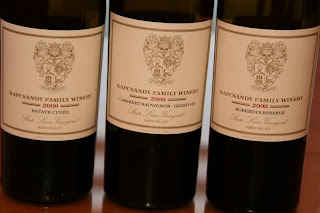
Since the inaugural vintage, I’ve been impressed by the wines of Lou Kapcsándy and his estate just outside of Yountville. Lou, who founded a construction company in Seattle, came in contact with the American wine business when he built the winery for Chateau Ste Michelle and Columbia Crest in Washington.
The Kapcsándy family moved to California in 1962, and wine slowly became a more important part of the daily life for Lou and his wife Roberta. At that time, there wasn’t too many wineries up and running, but Lou visited the very few that were operation in Napa Valley and Sonoma at the time. Later on, in 1998, he started to import fine wines from France, mostly from Bordeaux, and from his homeland Hungary.
For many years, he had been a huge fan of the Private Reserve Cabernet Sauvignon from Beringer, and he noted that the Cabernet grapes from the State Lane Vineyard in Yountville very often constituted a significant part of the blend. When he sectrely heard that this vineyard was for sale in 2000, he put a bid on it and bought it. At the time, the vineyard was heavily hit by phylloxera, and Beringer, who since 1975 had a 30 year long lease on farming the vineyard, had cancelled the contract already in 1999, with a new contract to buy grapes the remaining five years.
The truth is that Beringer had wanted to buy the vineyard and replant it, if they had been given such an offer. Instead Lou Kapcsándy bought the vineyard before Beringen knew if was out for sale.
When Lou Kapcsándy took over, he planted the vineyard according to Bordelaise methods, with higher density and lower trained vines, he also changed the row orientation to obtain a more optimal effect of the sun and the airflow. He also made deep analysis on the soil, so he could plant the right grape variety and clone in the perfect matching soil.
The result has since the first vintage 2003 been remarkable, and the wines from Kapcsándy are already now among the finest produced in Napa Valley. Behind that quality and style, one finds a small state of the art and ultra clean winery, a sorting of grapes that is unparalleled, and an ambition that is sky high. Only French oak barrels of the finest quality are used.
Alcohol levels were a bit higher in the 2008 vintage compared to previous vintages, and I hope this was an exception from the rule. Neither Lou Kapcsándy nor his winemaker Denis Malbec is very keen on high alcohol levels, they opt for a maximum strength of 14.5 percent, but most often the alcohol is normally in the range of 13.5 to 14.0 percent.
I must say that these wines are among the finest ever made at this estate. Still I can’t get the outstanding 2007s from my memory. I just tasted the 2007 State Lane Vineyard Cabernet Sauvignon (below called "Grand Vin" in the 2008 vintage), which an absolutely stunning effort and a wine of great complexity, although still very youthful and marked by its classical structure. To be honest, you don’t have to look for any given vintage to find pleasure here, you just have to work hard find any bottle at all. And when you do, you’d better buy it.
The total production is around 4 000 cases of wine per year, and every single bottle comes from their own 6.50 hectare State Lane Vineyard.
2008 Endre / 90 p
According to Lou Kapcsándy, this is not a second wine, but another wine. “We put as much efforts in this wine as in the other wines, it’s just a wine with a lighter and more fruity body and leaner palate, made to be enjoyed earlier”, winemaker Denis malbec told me on my last visit at the estate. It’s a blend of about 55 percent Cabernet Sauvignon, 25 percent Merlot, 15 percent Cabernet Franc and a splash of Petit Verdot, all grapes from the estate vineyard. The wine was matured in French oak barrels, 80 percent new, for about 20 months.
As the intention was explained to me, this wine is clean and fruit forward with a sweet dark berry scent, quite elegant and easy to drink thanks to its lean texture with just a fine tannic structure. Style wise it’s related to the more serious wines (sorry for this comment, Denis) of Kapcsándy, but it doesn’t have the weight or the mid palate, or the intensity of flavor or the length. However, it’s good and very drinkable wine.
Drink it 2012-2018
2008 Estate Cuvée / 95 p
The estate cuvée is made to display the personality of the site, and the blend will vary quite a bit from year to year. In this vintage, the wine is made of 68 percent Cabernet Sauvignon (a relatively high proportion), 22 percent Merlot and five percent each of Cabernet Franc and Petit Verdot. It was bottled after 20 months in 70 percent new French oak barrels.
Color is young, dark purple and almost opaque. Although it’s just a baby, the nose is open and offers a great bouquet of ultra pure, sweet and intense dark berry fruit with loads of cassis and blackberries, still it’s overall a very elegant wine with a youthful oak sweetness. What I really liked when I tasted it, and had it in the glass for around 20 minutes, was how slow but well it developed in the glass. Don’t forget it’s a very young wine, it’s should be (and it is) packed with primary aromas, yet I almost wrote complexity in my first tasting notes. On the palate, it is rich with that same purity I always find in the wines from Kapcsándy, they really can afford to use only the very best grapes, therefore the texture is lush and silky and just held together with a very fine tannic structure. The oak is well integrated, although at this stage just a bit toasty. Consider the youth of this wine, the finish is very long, and delicious.
Drinking it in the coming few years, I’d give it at least one hour in the decanter, and I’d pour it in large Bordeaux glasses. But I recommend a few more years of bottle age, and then the true complexity will be there.
Drink it 2013-2028
2008 Estate Cabernet Sauvignon Grand Vin / 98-100 p
This is another absolutely stunning effort of this wine, just like the 2007 vintage of it. In this vintage the blend was 87 percent Cabernet Sauvignon, five percent each of Merlot and Cabernet Franc and just three percent of Petit Verdot. It was kept in French oak barrels, 85 percent new, for around 20 months.
As the Estate Cuvée, the color is dark, almost opaque, but the rest is quite different although you’ll see the house style. First of all, the nose is just stunning, totally amazing in its intensity and concentration, which however doesn’t make the wine overblown in any sense. On the contrary it’s so elegant thanks to its purity and freshness, and in contrast to the Estate Cuvée, there are already those complex Bordeaux like notes of cedar, lead pencil and grassiness (which is not unripness, but a quality sign on a perfect harvest decision). Still the fruit is dark, a bit sweetish and just lovely. On the palate it’s very rich with a great intensity, good mid palate and lingering aftertaste, it is well held together by the firm but perfectly ripe tannic structure, and thanks to the acidity the taste is fresh. Neither oak nor alcohol stands out, which is another sign of a very great wine, but there is s slight oak bitterness in the very finish of the taste, which is totally natural is a young wine like this.
As for the Estate Cuvée, some more years of bottle age is recommended, and the serving recommendations are the same. This wine though, would most likely live much longer.
Since it was only made in 400 cases, and Robert Parker gave it a perfect 100 point score, it will be very hard to find. However, it’s well worth trying!
Drink it 2014-2038
2008 Roberta’s Blend / 98 p
I have said many times that the Roberta’s Blend is one of the very best Merlot wines in the world. This vintage is another proof of that statement. In this vintage, there’s just four percent of Cabernet Franc in the blend, and the wine was raised in brand new French oak barrels for 18 months. “This vintage may well be the best we’ve achieved so far”, Lou Kapcsándy said when we tasted the wine together, and I’m willing to agree. As in the others wines, color is impressive, as is the nose. It boasts of dark ripe fruit, loads of blueberries, blackberries and cassis, and there’s also a very fine note of hazelnuts and dark chocolate from the oak, that marries just perfect with the fruit. On the palate, it’s richer than the Grand Vin, still the structure is there to make it totally dry and perfectly well balanced, and it’s just a wonderful wine with a great intensity and energy, and it will be a lolely wine to keep at least ten years to see how the complexity evolves over the years.
Serving recommendation is the same as for the other wines.
Drink it 2012-2033
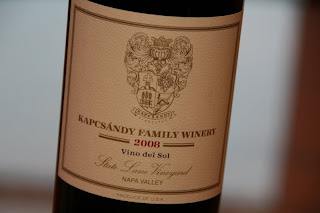
2008 Vino del Sol / 95 p
This is a fun little sweet wine, made in a different way than in the 2007 vintage, when it was made entirely from dehydrated Merlot grapes from Roberta’s Block. In this vintage, it’s a blend of 47 percent Merlot, 34 percent Cabernet Sauvignon, 15 percent Cabernet Franc and four percent of Petit Verdot. The grapes were crished and fermented in steel tanks to around five to seven percent of alcohol before a neutral local brandy was added to stop the fermentation and leave around 90 grams of residual sugar in the wine and out the alcohol strength at 17.6 percent.
This port styled wine is lovely, loaded with sweet and delicious flavors of sun ripe blueberries, black currants and blackberries, and although it’s high in alcohol, it’s much smoother than most ports. Acidity is fine rather than lively, but it gives some needed freshness to the taste. I find it to be a delicious that I’d love to serve at around 16-18 degrees Celsius in medium size glasses to matured blue cheeses, or (which I prefer myself) to rich chocolate desserts.
Drink it 2011-2020
Народные средства от запора
2015-05-06 09:58:00 (читать в оригинале)• Алоэ. Срезать и положить в холодильник на 2 недели листья растения. После чего отжать сок и смешать в равных количествах с медом. Принимать утром за 30 минут до еды, 2 или 3 дня. Стул нормализуется.
• Крушина — испытанное средство при слабой работе кишечника. Крушина (кора) — 4 части, укроп (семена раздавленные) -1 часть, лен (семя) — 1 часть. Заварить столовую ложку смеси на 200 г воды, натомить на водяной бане 20 минут. Выпить утром в один прием.
• Брусника. Вода, в которой длительно вымачивались брусника, обладает слабительными свойствами.
• Морковный сок является вкусным, полезным продуктом и мягким слабительным, особенно для детей.
• Терн. Смесь цветов и листьев обладает слабительным и мочегонным действием. Заварить 2 столовых ложки на стакан воды. Пить как чай.
• Страдающим запором знахари советуют пить воду, в которой долго варились сливы и овес.
• Сок редьки, рассол капусты в теплом виде, простоквашу и чай из сушеной вишни и сушеных яблок пить от 4 до 5 раз в день.
• Полезно пить рассол капусты с .дрожжами.
• Для клизмы: взять одну столовую ложку толченого льняного семени (можно заменить овсом, ячменем или листьями мальвы), вскипятить в 4 стаканах воды, процедить и добавить 2 столовых ложки льняного или конопляного масла. Клизма должна быть весьма теплой.
• При хроническом запоре в рацион питания включать плоды сливы темной окраски (чернослив) как в свежем, так и в переработанном виде (сухофрукты, компоты и др.). Свежие плоды заливать кипятком, настаивать, но не добавлять сахара. Есть в течение всего дня по несколько штук.
При сильном запоре натереть на мелкой терке капусту с яблоками, съесть на завтрак. На обед: ложка меда, 2 ложки воды, 3 ложки овсяной каши, 2 тертых яблока и сок лимона. На ужин — вареные овощи, яйца, орехи. Весь день пить сок моркови.
Бесплатный Электронный Журнал "Декор Дома Своими Руками"
2015-05-06 09:58:00 (читать в оригинале) Бесплатный Электронный Журнал
"Декор Дома Своими Руками"

https://vk.com/schtora


https://vk.com/podagra_lechenie
2015-05-05 00:08:00 (читать в оригинале)
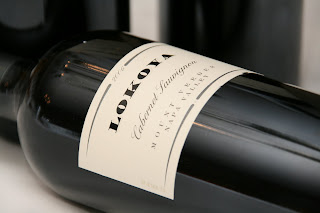
In 1994 Jess Jackson created the exclusive label Lokoya, named after a word Indians who lived up in the Mayacamas ranges used. The idea was to craft a range of great cabernets from different appellations within the Napa Valley. In that mission, the team Jess, his winemakers and wine growers were successful, and for many years I have looked (and tasted) at the Lokoya wines as some of the finest and most impressive efforts in Napa Valley.
The Lokoya winery doesn't own any vineyards, all grapes are sourced from the very best vineyards, lots and even rows that Jess Jackson has purchased in Napa Valley. As for Pierre Seillan at Verité in Sonoma, the winemaker at Lokoya, Chris Carpenter, gets to chose grapes first of all winemakers, hence the high quality of each vintage.
There are now four different bottling of Lokoya, one from each of the prestigious mountain appellations in Napa Valley, on the western side Diamond Mountain and Spring Mountain in the north and Mount Veeder (the best blocks in the great Veeder Peak Vineyard) in the south, and on the eastern side on from Howell Mountain (predominately the Keyes Vineyard).
All four wines are crafted in the same way, one hundred percent Cabernet Sauvignon (24-36 hectoliter per hectare), fermented with its own yeast in small open top fermenters of steel after four to five days of cold soak. The wine is matured in new French oak barrels for 18-22 months depending on each wine and the vintage, and there’s no fining or filtration before bottling.
Production is small, not more than 2 000 cases per year in total in a good vintage. The wines are only sold through mailing list and at the Cardinale Winery in Oakville, where the wines are made.
The sad thing is that prices took a giant leap up by the 2007 vintage, to 400 dollar per bottle. In one way I understand it – quality is outstanding, all four wines are among the very finest produced in their respective appellation – and production is smaller than the demand for the wines. I guess we have to accept the rising prices, there are now more and more wines getting closer to the magic 500 dollar limit, where (so far) only Harlan Estate and even more Screaming Eagle have touched or surpassed.
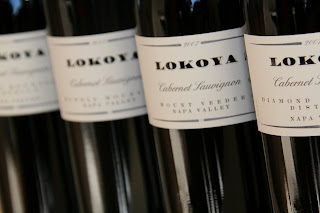
Vintage 2007
2007 Cabernet Sauvignon Diamond Mountain / 95-96 p
Of all wines from Lokoya, this is always the most approachable as young. It offers a quite open, intense and fruit driven nose with lovely notes of cherries, maraschino, cassis and almonds, as well as a slight touch of the oak vanilla. If the other bottling of Lokoya is firm and tannic at this young stage, this one is more polished, as if the tannins were almost totally absorbed by the medium to full bodied and rich taste. There are also fine notes of mineral, almost towards a slight saltiness, and the acidity also help to give freshness to the taste. The wine was decanted a good hour before I tasted it, which was a good thing as the taste still is a bit closed, especially in the finish.
Drink it 2011-2027
2007 Cabernet Sauvignon Spring Mountain / 96-97 p
Compared to the Diamond Mountain, the Spring Mountain bottling offers a sweeter and more intense flavor of cassis, but there’s also more aromas of stony minerality and rocks, which (at least for me) gives the wine a slightly more interesting complexity. In that sense, it’s also more distinct. On the palate, it tastes a bit younger due to the deeper fruit, higher density and more marked tannic structure. Again, the oak is extremely well absorbed by the fruit – the winemaking skill of Chris Carpenter is well worth mention, there’s 100 percent new French oak used also in this wine. The aftertaste is fine, but a bit closed at this young stage. A couple of years of cellaring are needed to see the full potential. Drink it 2013-2032
2007 Cabernet Sauvignon Howell Mountain / 98 p
Howell Mountain at its best – this is a manifest in mountain grown fruit. The color is dark purple, rather opaque to be honest, and even though the wine is very young and in no way offers the full range of flavors it will do in the coming years, the nose is just gorgeous in its full power, dark ripe but yet young fruit – mostly dark cherries and cassis, but there are also the typical fragrance of crushed rocks (I just love that) to reveal its origin – the poor volcanic soils of Howell Mountain. The taste is rich, packed with dark ripe fruit, yet so closed and restrained due to its marked tannic and mineral structure. Having had several vintages of the Howell Mountain from Lokoya over the past ten years, I know time will tell you another story than this tough one. Be patient, keep it a few more years, decant it at least one hour before you drink it, and enjoy it with a rich dish to soften the tannins even more. Already today the aftertaste lingers for a minute – just imagine what it will do in some years from now when the tannins will soften. This is the finest vintage of the Howell Mountain from Lokoya I have tasted!Drink it 2014-2032
2007 Cabernet Sauvignon Mount Veeder / 98-99 p
This wine is normally the most concentrated and well structured of them all, and so it is also in this vintage. Color is as dark and opaque as in the precious wines, but the nose is a bit more dense and concentrated, however more intense and aromatic. I find sweet cassis as well as some lighter red fragrances, walnuts, a touch of the oak vanilla (but no toasted aromas), the same fine stoniness and minerality as in the Howell Mountain bottling, and it’s just impressive how concentrated this wine is without being too much or even sweetish. On the palate, it’s huge, full bodied and concentrated with a dense and ripe but in no way sweet fruit, and in although it’s young and firm, the aftertaste lingers for more than a minute! Add the salty mineral saltiness to all that, and you’ll understand how complex this great wine is. I’d give it a couple of more years more to polish the tannins a bit more, and it is recommended to decant it at least an hour prior to serving it. Drink it 2014-2032
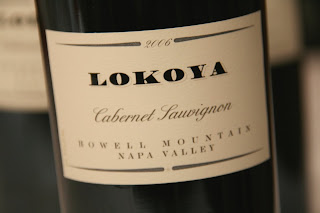
Vintage 2006
2006 Cabernet Sauvignon Diamond Mountain / 95 p
Drink it 2012-2026
2006 Cabernet Sauvignon Howell Mountain / 96-97 p
One hundred percent of Cabernet Sauvignon from the Keyes Vineyard on Howell Mountain, and in the hands of winemaker Chris Carpenter, those grapes turned out to be just fantastic in the bottle. This is dark, well, actually it’s opaque, and youthful in its ink purple color. As expected the concentrated dark fruit is ripe but not sweet, since it’s balanced with loads of tannins and stony minerality – oh, yes, the Howell Mountain volcanic soil comes with the bottle. Surprisingly it’s not rustic or harsh at all, on the contrary I wrote “delicious” in my tasting notes, that’s because the intensity of the slightly sweetish, cherry like ripe and very delicious fruit. This dark fruit is joined by notes of graphite, an almost granite like dustiness, but to my surprise very little oak. Almost a third of the wine was left in the bottle until the day after, and when tasted, it was absolutely stunning. Even day two after the tasting, the wine held together in a way that was amazing. To me, that’s the best sign of a wine that will evolve slowly over many years, into something even more fantastic. A recommendation though, is to decant this wine at least 2-3 hours before serving it. Drink it 2014-2030
2006 Cabernet Sauvignon Mount Veeder / 96-98 p
Normally the most impressive bottling from Lokoya is the one from Mount Veeder, and in this vintage there’s no change from that “rule”. When I poured it, it was a bit closed, still almost opaque and densely concentration, but I felt it didn’t show all its glory and power. Therefore I let the wine sit in the decanter for almost two hours before I started to taste and judge the wine properly. Even if there was a slight spiciness from the oak, it was extremely well integrated in the dense fruit, a detail that reveals the skill of the winemaker. Of the three 2006s of Lokoya, this is the most concentrated, but also the most impressive – not for its power, but for its overall fantastic balance. The fruit flavors are best described as cassis (with just a hint of aromatic greenness) and sour dark cherries, especially after several hours in the decanter. For sure there’s a lot of concentration here, still the minerality breaks through the fruit and adds a great complexity. Then there’s also a very fine tuned of chocolate (from the oak), but I wouldn’t call it oaky. As for the other Lokoya wines, I kept the bottle for one, and even two days, just to see how well it kept. Again, that’s a very good sign!Drink it 2014-2030



Категория «Бизнес»
Взлеты Топ 5
 | ||
|
+1006 |
1094 |
ДеВаЧкА-НеФоРмАлКа |
|
+989 |
1001 |
White_Rabbit_Pics |
|
+988 |
1000 |
Смотрим на жизнь сквозь сетку |
|
+934 |
1101 |
Вадим Гоц |
|
+928 |
932 |
Блог о подарках и праздниках |
Падения Топ 5
 | ||
|
-1 |
10 |
Блог Находчивого Продавца |
|
-1 |
459 |
alexfox2011 - BLOG.I.UA |
|
-2 |
3 |
Деньги в интернете |
|
-5 |
992 |
Allendy.ru - экономический портал |
|
-6 |
729 |
Натяжные потолки Херсон |

Популярные за сутки
Загрузка...

BlogRider.ru не имеет отношения к публикуемым в записях блогов материалам. Все записи
взяты из открытых общедоступных источников и являются собственностью их авторов.
взяты из открытых общедоступных источников и являются собственностью их авторов.